


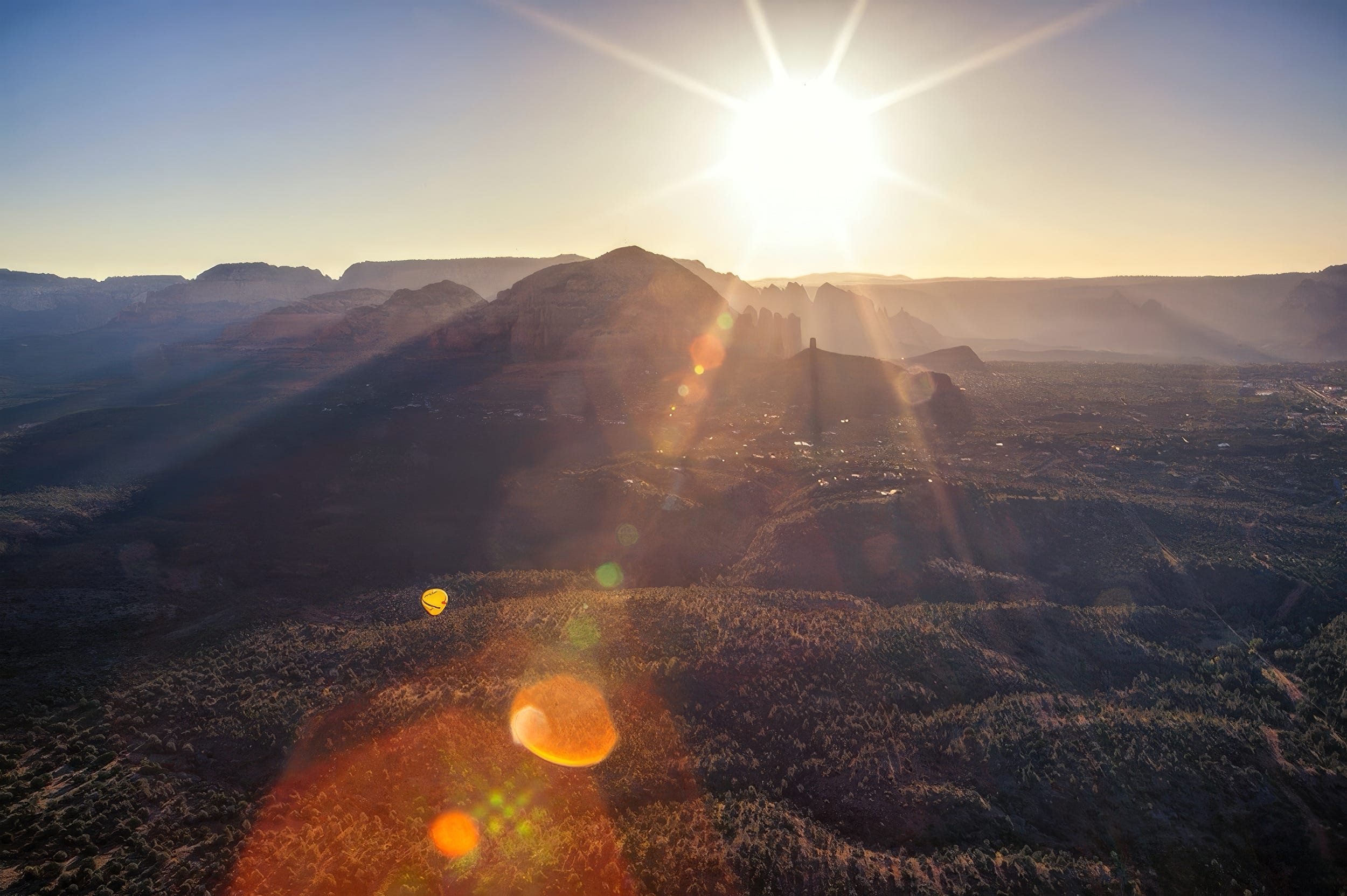
Last night, I stood in front of a room in Prescott, Arizona and talked about power.
I had spent weeks thinking about what I wanted to say. We’re heading into the midterms, and more than anything, I wanted people to understand that we have power.
I’ve spent a lot of time thinking about that word this year. Who has it. Who wants more of it. How it’s accumulated. How it’s protected. And how easily we can be made to believe that power belongs almost entirely to people somewhere above us.
Presidents. Billionaires. Courts. Legislatures. Corporations. Political parties. Organizations with enough money and access to make themselves heard.
Spend enough time looking at the world that way and it becomes very easy to feel small.
I can understand that feeling.
But I don’t believe it.
So much of what we are living through right now can feel enormous. Project 2025 can feel enormous. The concentration of wealth and political power can feel enormous. The attacks on institutions, education, journalism, immigrants, LGBTQ+ people, reproductive freedom and the basic machinery of democratic government can feel enormous.
And some of that power is enormous. But it wasn’t conjured from thin air.
It was built.
The Heritage Foundation published its first Mandate for Leadership as Ronald Reagan was coming into office. The Federalist Society was founded in 1982. Think tanks, donor networks, religious organizations, legal networks and media networks grew around them.
People recruited and trained other people. They prepared for elections they hadn’t won yet. And when they lost, they kept going.
For decades.
There’s something frightening about recognizing how patiently that power was built. But there’s something else in that history too. Power can be built.
And it doesn’t belong exclusively to them.
That was really what I went to Prescott to talk about. But I couldn’t explain why I believe it without explaining a little about how I got here.
I’m not a politician. I’m an artist.
I’ve been a writer and photographer most of my life. I’ve written about art and photography, science and nature. I’ve written for magazines. I’ve written a novel I’m currently rewriting. I’ve painted and designed and photographed and taught.
I didn’t wake up one morning and decide I wanted to become a political writer. I reached a point where I couldn’t justify being quiet.
I’ve had people tell me to “stick to photography.”
Musicians get told to stick to music. Actors get told to stick to acting. Artists get told to stick to art. As though citizenship is a profession. As though democracy is something we outsource to politicians and then go back to whatever we were doing.
But politics isn’t some separate little category of life we can choose to avoid. It determines our rights. Our schools. Our roads. Our public lands. Our healthcare. Our courts. Our economy. The air we breathe and the water we drink.
It’s how we make decisions about living together. Because democracy doesn’t belong to politicians. It belongs to all of us.
And perhaps my own history made that impossible for me to ignore.
I’m a first-generation Ukrainian American.
My grandparents lived through war, displacement and authoritarianism. I grew up during the Cold War, and I remember the extraordinary optimism of 1989 through 1991. The Berlin Wall came down. Gorbachev pursued glasnost and perestroika. The Soviet Union dissolved. And for a while, it seemed as though we were watching history move in one direction. Toward democracy.
I remember believing democracy had won something permanent.
It hadn’t.
History doesn’t move in only one direction. Russia taught us that.
Democratic institutions don’t necessarily disappear all at once. Elections can still exist. Courts can still exist. Media can still exist. The structures can remain while their ability to restrain power is steadily weakened.
Independent journalism can be attacked. Expertise can be discredited. Courts can become subservient. Loyalty to one person can become more important than loyalty to institutions. Propaganda can make reality itself feel negotiable.
History doesn’t have to repeat itself perfectly for history to warn us. Democratic erosion has patterns. Once you’ve watched them unfold somewhere else, it becomes difficult not to notice them when they begin appearing closer to home.
Democracy can move backward.
I’ve watched it happen.
And this year, that history became even more personal when my cousin sent me thousands of old family photographs. Photographs of me growing up, my grandparents, my ancestors, pieces of family history stretching back generations. Buried among them was one photograph that stopped me.
My grandfather was standing above a crowd, speaking at a rally in a displaced persons camp.
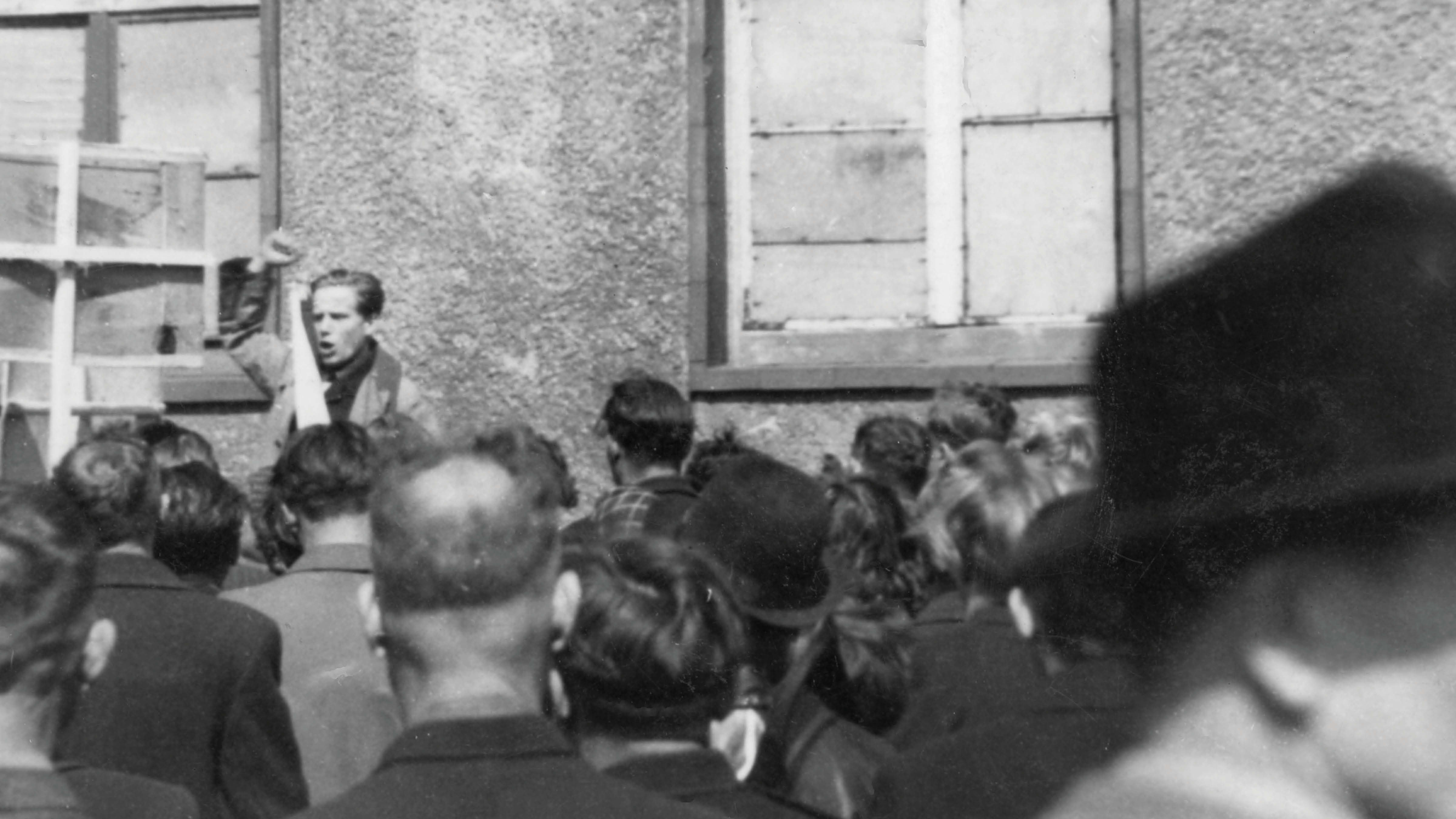
He had been part of the anti-Bolshevik resistance. I knew about his activism. I knew about the work he had done. But I had never seen that photograph.
There he was, speaking to a crowd with his fist raised.
And I knew that image because I had seen it somewhere else.
In myself.
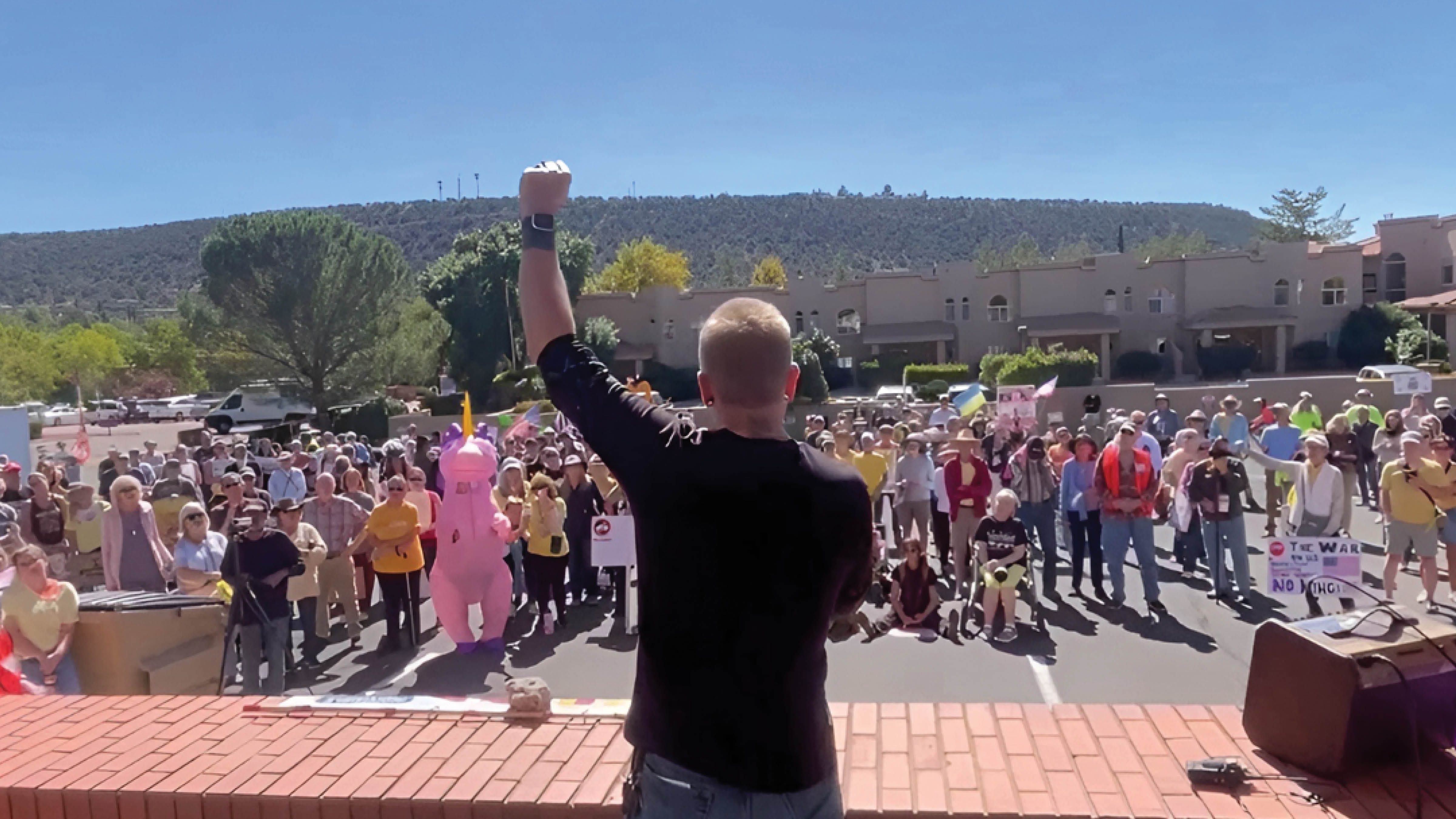
Decades later, in another country, standing before another crowd, my own fist raised.
Looking at those two photographs together, I thought maybe this really is in my blood. Maybe some of that refusal to stay quiet really was handed down to me.
But as deeply personal as those photographs are to me, there was a larger reason I wanted to share them in Prescott.
Courage may be part of my inheritance. Citizenship is part of all of ours.
You don’t need my grandfather or Ukrainian ancestry. You don’t need to be a writer. You don’t need a microphone or a platform. You don’t need thousands of followers or some extraordinary act of courage before anything you do matters.
You just need to understand that democracy belongs to you too.
And that brings me back to four words I’ve been using for almost a year now.
We have friends everywhere.
When I chose that name last November, I borrowed it from Andor. “I have friends everywhere” was a quiet signal between people resisting an authoritarian system. It meant something simple to me then: you aren’t alone. I’m here too.
I understood those words one way when I chose them.
I understand them differently now.
Because after nearly a year of writing, speaking, listening and watching people find one another, I don’t hear only reassurance in them anymore. I hear responsibility.
Authoritarianism doesn’t depend only on laws, propaganda or powerful people. It depends on isolation too. It needs us to believe everyone else has surrendered. That speaking won’t matter. Showing up won’t matter. Voting won’t matter. That the people with the money and the machinery are simply too powerful to challenge.
Isolation can turn millions of people into millions of frightened individuals.
Connection turns them into a public.
And a public has power.
That’s what We Have Friends Everywhere means to me now. Not simply you’re not alone.
You’re not alone, so don’t act like you are.
When the machinery looks enormous, we don’t only look up.
We look around.
